

 ChatGPT
 Claude
 Perplexity
 Grok
Grok
Introduction
The way in which enterprises communicate changed over the past years, from traditional phone systems to cloud-based platforms. Nowadays, cloud telephony for enterprise is not an advantage, but an important pillar for business communications. With companies focusing on hybrid work and customer centricity, cloud telephony providers reshape how a business connects, engages, and operates at scale.
Market growth & forecast
The global cloud telephony market is rapidly growing. According to yahoo finance, the cloud telephony service market is set to grow from USD 26.69 billion in 2025 to USD 42.60 billion by 2030, growing at a CAGR of 9.8%. This shows that companies are shifting from traditional PBX systems to cloud based solutions that offer scalability and flexibility in communication systems. This trend will also continue through 2026 and coming years.
Key factors fueling adoption in enterprise communications
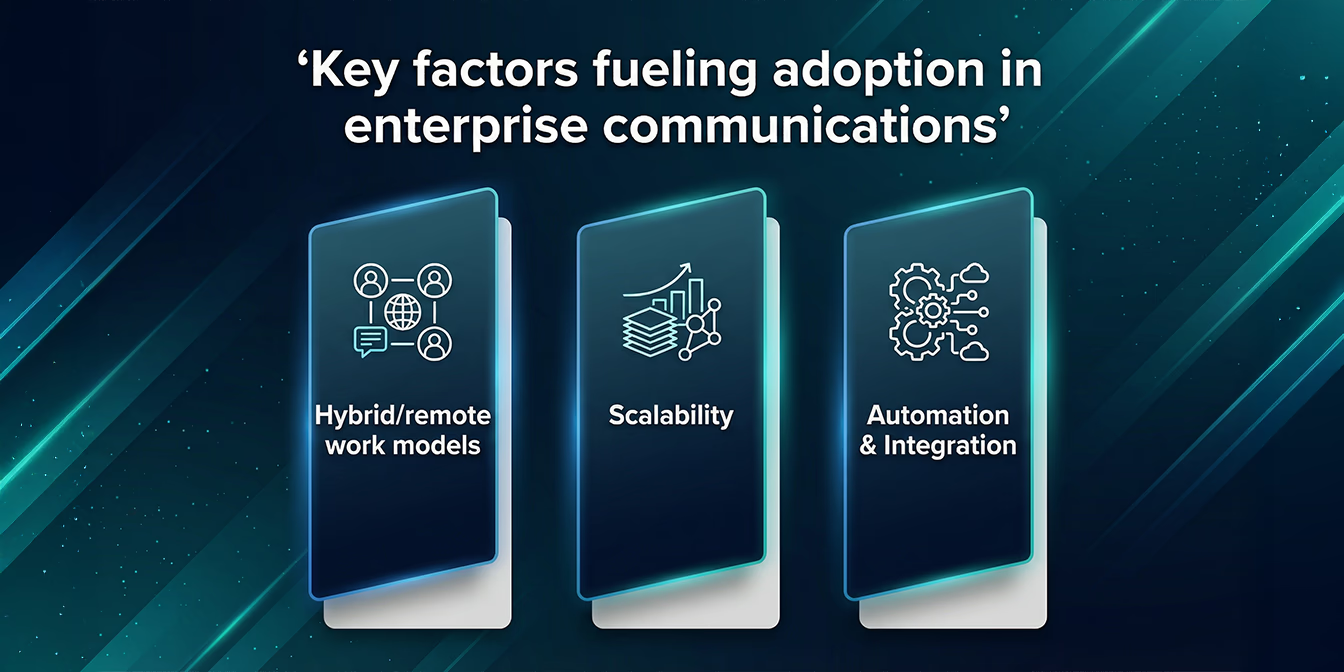
Some of the main factors that influence the adoption are the following:
- Hybrid/remote work models: With remote and hybrid work models, enterprises need to rely on communication systems that can work from anywhere. Cloud telephony for enterprises will meet this demand. This is possible because of the features like global connectivity without any infrastructure limitations.
- Scalability: With cloud telephony adoption, businesses need not large upfront investments. Enterprises can add users or new features without purchasing new hardware. This will offer scalability for businesses and align with their growth.
- Automation & integration: Businesses can automate various routine tasks that result in operational efficiency. With AI-powered analytics and reports through customer relationship management integrations, there will be better customer experience.
Why enterprises prefer cloud telephony over traditional systems?
Cloud telephony for enterprises replaces rigid, hardware PBX systems with software based systems. The cloud systems can unify the voice, messaging, and other collaboration tools across different locations and devices.
Enterprises can avoid challenges in communication and automate workflows with easier CRM, ERP, and other cloud telephony features integration.
Impact of AI-powered features in enterprise telephony
Cloud telephony for enterprise becomes more smarter and easier with AI-powered features. In addition to handling calls, modern solutions listens, understands, and assists businesses to make customer-employee communication easier.
Sentiment analysis is an important feature of AI which understands whether a customer is happy, upset, or frustrated during a call. For e.g., in large retail companies, managers can easily identify customers that are not happy and step in before any major problem occurs. This will help businesses to keep their customers satisfied.
Automated call analytics feature reviews thousands of calls efficiently. It will then provide main insights like common complaints of customers, peak call hours, and performance of agents. For e.g., an enterprise customer care team can easily find why there is an increase in call volumes after the launch of a product and can fix issues faster.
Real-time assistance feature in cloud telephony for enterprise helps agents during live calls from customers. While the agent handles the customers, the system can suggest answers, display details of the customers, or offer the right steps of problem solution to the agent. For e.g., In the banking sector, agents can provide correct information every time a customer calls. This reduces mistakes and time to handle the calls.
So, we can say these intelligent features help enterprises save time, reduce effort, as well as deliver consistent customer experiences. This makes cloud telephony for enterprise an important feature for business growth in 2025-2026.
Challenges and enterprise considerations
Even with many advantages, there are some challenges that need to be considered by cloud telephony for enterprises. They include:
Security & privacy: Customers share private data during a call. So, when moving these data to the cloud, there will be concerns about leakage of data, unauthorized access, or cyber attacks.
Solution:
Enterprises should select cloud telephony solution providers who use end-to-end encryption methods. There should be strict controls on access, audits should be done regularly, and follow global level security standards. This will protect data during a call and while stored.
Regulatory compliance: Enterprises that work across different parts of the world should comply with the industry regulations. Enterprises not following these rules may face legal complications
Solution:
Cloud telephony for enterprise should follow built-in features for compliance. To meet local regulations, enterprises can easily adapt communication policies.
Network quality: Cloud telephony works using the internet. If there is inconsistent network infrastructure, enterprises will experience call drops, latency, or poor voice quality.
Solution:
Top cloud telephony providers will use intelligent call routing, optimize bandwidth, and several network redundancies.
Integration: There may be difficulties of integration with existing systems like CRM, ERP, or other internal tools. This may affect operational efficiency.
Solution:
Cloud telephony for enterprise will use user friendly API based integrations. This will make sure easier integration with internal tools.
Adoption of cloud: Agents may find it difficult to move from traditional systems to cloud based systems because of complex interfaces.
Solution:
Cloud telephony solutions use user-friendly interfaces which require minimal efforts for training employees. Enterprises can shift to new features slowly to ensure smooth adoption
Conclusion: The future of enterprise communications
Cloud telephony for enterprise reshapes the future of business communications. Many of the enterprises move toward cloud telephony. This is because enterprises prefer digital-first operations, hybrid work environments, and customer-centric strategies. Cloud communication platforms offer the flexibility, intelligence, and scalability that traditional systems cannot match.
In 2025–26, enterprises are not just adopting cloud telephony to reduce costs, but to gain real-time insights, improve employee productivity, and deliver seamless customer experiences across multiple channels. With AI-powered capabilities such as call analytics, sentiment detection, and real-time agent assistance, cloud telephony is evolving into a strategic business tool rather than just a communication system.
References:
- “Cloud Telephony Services Market Worth $42.60 B by 2030.” Yahoo Finance, 18 Nov. 2024, https://finance.yahoo.com/news/cloud-telephony-services-market-worth-105000249.html