

RCS business messaging is an advanced SMS that allows messages with images, buttons, or interactive content. Many brands use RCS to connect seamlessly with their customers, hence improving the brand communication.
However, a recent Indian government move creates some confusion among the RCS business messaging providers. On Dec 19, 2025, The Economic Times reported that the government had issued a directive that messaging service should be available with verified SIM cards. With this news, there are concerns on how to treat RCS, whether it should be regulated like an OTT service or like a traditional telecom service. The answer to this question is important as it affects how RCS can be offered and used by businesses and service providers.
Businesses should view this directive as a development rather than a hindrance. RCS service providers can help brands adapt smoothly and remain compliant.
Understanding the new government directive
According to the new government directive on SIM binding, every messaging service must make sure every user account is linked to the SIM card in the customer’s phone. According to The Economic Times, RCS business messaging providers not following this rule may face penalties under the 2025 telecom cyber security rules. Some famous messaging apps already use this system and users only need to reverify their SIM cards. However, many experts say this is difficult to manage and may be inconvenient to users. Some also believe it does not significantly reduce fraud, instead genuine users and companies find it difficult to communicate, as reported by Business Standard.
The main aim of the new government directive is to reduce cyber fraud. This is possible by ensuring all message services are linked with active and verified SIM cards. While this order is appreciative considering the security perspective, it still opens debate on its application on RCS messaging, which depends both on telecom standards and internet based services.
With the implementation of this new directive, let us see what all changes may happen to the RCS messaging ecosystem.
- User experience: When the SIM-RCS linking becomes mandatory, it will be difficult for users with dual SIMs, e-SIM, multiple devices, or web versions. During a conversation, if a user changes their SIM, it will interrupt the conversation. This will affect the smooth business-customer communication.
- Business use-cases: Brands depending on RCS business messaging for alerts, customer support, or promotions need to make technical changes to cope with the new legal directive. Customer interactions may not continue smoothly if he/she uses multiple numbers or switches the phones often.
- Technical challenges: SMS services are tied with a phone number and SIM card. However, RCS works over the internet. It can work without a SIM once it is set up. However, the new order forces constant SIM checks. This may make RCS more difficult and reduce its efficiency & flexibility.
What does the new directive mean for brands?
With the new government directive, there will be a shift in the way messaging platforms including RCS operate. For brands, this may create concerns like continuity in message delivery, customer experience across devices, compliance responsibility, or technical readiness. This is where an RCS business messaging providers becomes a strategic partner for your business.
How RCS messaging providers support brands under the new rules?
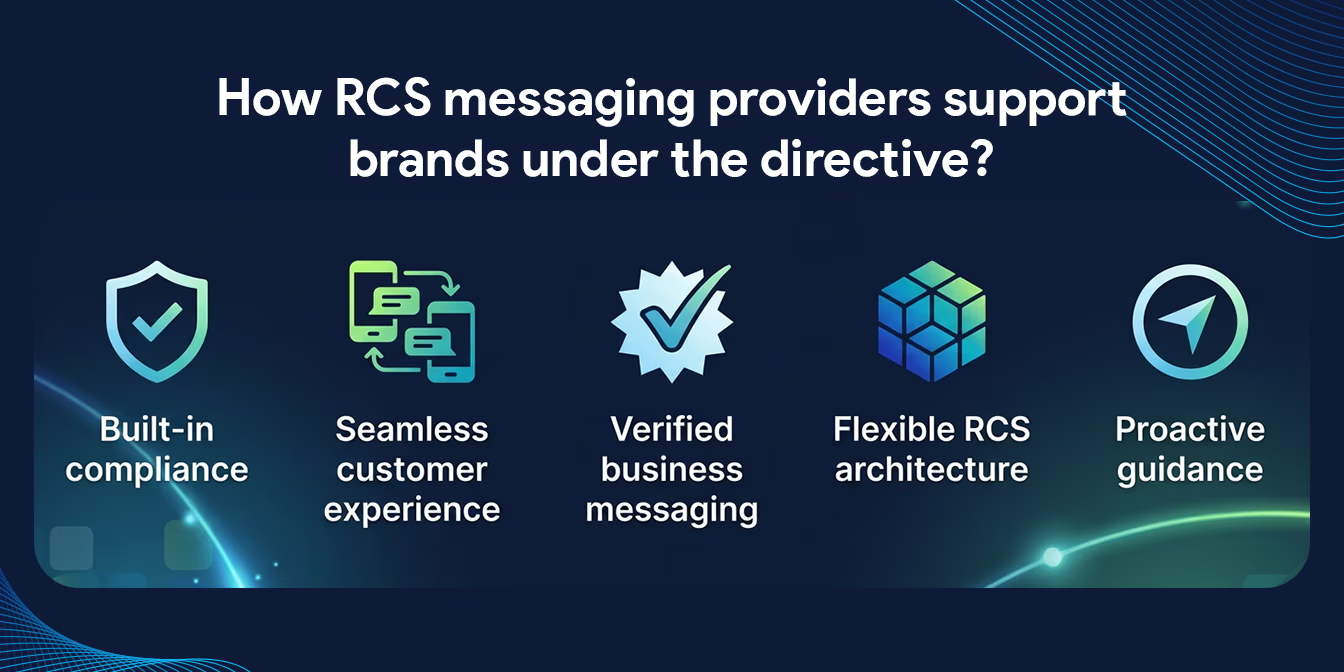
- Built-in compliance: With an RCS business messaging providers, the regulatory compliance is managed at platform level. The provider will manage the SIM verification and policy alignment. Brands don’t need to manage SIM binding logic themselves. The messaging workflows will also remain compliant without disrupting campaigns. This helps businesses to focus on customer engagement and not regulatory challenges.
- Seamless customer experience: SIM binding usually interrupt customer conversations if they switch devices, numbers, or SIMs. RCS business messaging providers can reduce this impact by maintaining session continuity wherever permitted, handling reverification flows smoothly in the background, and ensuring branded sender identity and conversation history remain intact. So, customers will not feel the regulatory change even if the system adapts behind the scenes.
- Verified business messaging: Is RCS messaging safe? One of the great benefits of the new order is higher trust in messaging channels. RCS business messaging providers can help brands leverage this. With the verified business profiles, impersonation risks will be reduced. As now the messaging is SIM linked, the authenticity of the sender will be ensured. Customers will also gain confidence that messages are genuinely from the brand. This strengthens brand credibility and improves engagement rates.
- Flexible RCS architecture: The RCS platforms should evolve as the regulations evolve. RCS business messaging providers must help brands by designing integrations that support multiple authentication models. They must also ensure compatibility with carrier and regulatory updates. They may also minimize downtime during policy changes. This approach protects brands from sudden disruptions.
- Proactive guidance: RCS business messaging providers act as advisors for businesses, in addition to the technology provider. They share updates on DoT, TRAI, and telecom policy changes. They can translate regulatory language into business impact. RCS partners also advise brands on best practices for compliant messaging. This helps brands make informed decisions with confidence.
How to turn the regulation into your competitive advantage?
The SIM mandate directive creates an opportunity for cleaner, safer, and more trusted business messaging. With the right RCS provider, businesses can
- Reduce fraud risks
- Increases customer trust
- More secure & reliable messaging
- Easy regulatory compliance
Instead of slowing down RCS adoption, this directive can accelerate enterprise confidence in rich business messaging.
Conclusion
India’s SIM verification directive highlights a critical truth—business messaging is no longer just about reach, but responsibility.
As an RCS business messaging service provider, your role is to:
- Absorb regulatory complexity
- Shield brands from operational disruption
- Enable secure, compliant, and engaging communication
By doing so, you empower brands to continue using RCS as a powerful, future-ready channel, without fear, friction, or uncertainty.
References:
- Lohchab, Himanshi. “RCS Messaging Caught in Regulatory Gray Area after SIM Verification Order.” The Economic Times, 19 Dec. 2025.
- “BIF Raises Concerns over Govt Directive Linking Msg Apps to Active SIMs.” Business Standard, 2 Dec. 2025.
Prompts:
- How does the RCS-SIM linking mandate rule affect the RCS partners?
- What changes does the new directive bring to the RCS ecosystem?
- How can businesses turn this rule into their competitive advantage?