

 ChatGPT
 Claude
 Perplexity
 Grok
Grok
Introduction
As customer’s expectations shift, call centers transform as experience centers rather than support centers. Hence, businesses should optimize their workforce. This will ensure operational efficiency. By 2026, call centers will face new challenges. This includes hybrid work models, AI-augmented agents, stricter compliance, and customers needing quick and tailored support, that too, across various channels. These changes call for the need of an efficient workforce management software to meet new realities.
In this article, we’ll see the 10 key workforce optimization trends and focus areas call center leaders must watch in 2026.
10 Key things to watch in call center workforce optimization
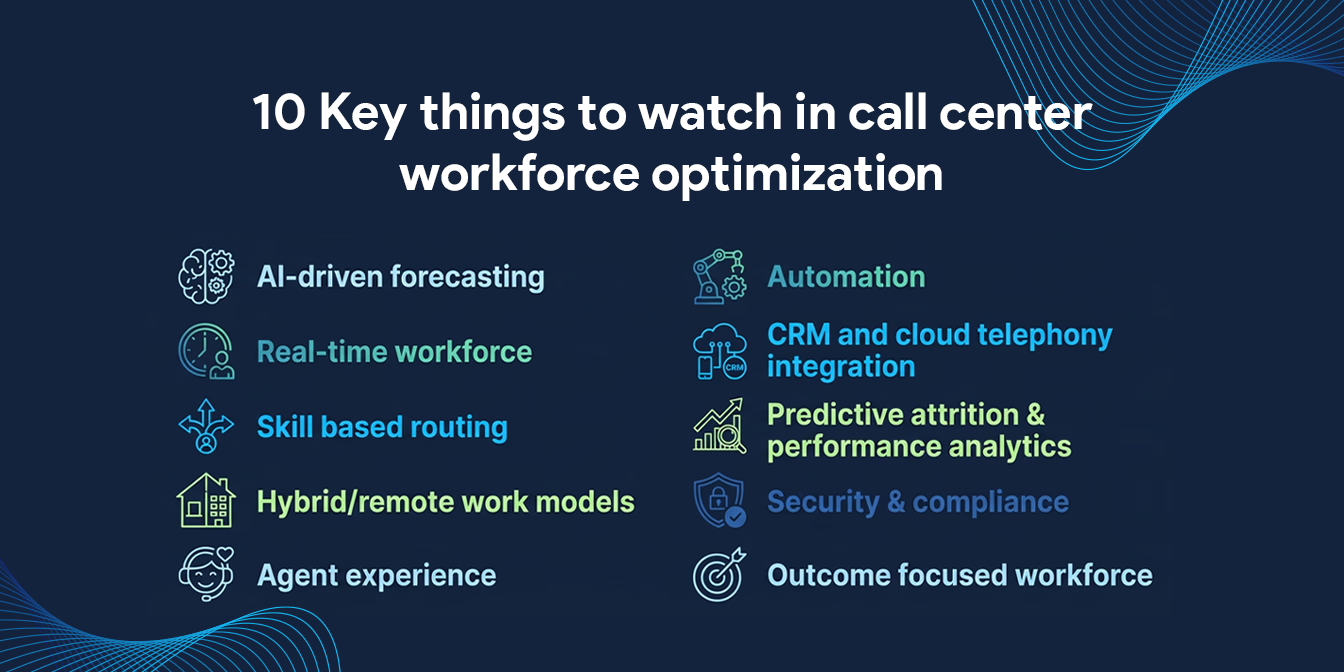
AI-driven forecasting
During seasonal spikes, traditional models find it difficult to meet the customer expectations. In 2026, workforce management software will depend heavily on artificial intelligence and machine learning. This helps to accurately predict the call volumes.
Businesses can predict the staffing needs after properly analyzing the data. Hence, there will be less understaffed shifts and lower agent burnout. This improves the service quality.
Better forecasts directly translate into better customer experiences and lower operational costs.
Real-time workforce
Modern call centers can no longer work with fixed schedules. In 2026, businesses should focus on dynamic and real-time management of the workforce. A good workforce management software can help to track volumes of calls, availability and performance of agents. With this data, managers can adjust schedules, breaks, and skill assignments.
With these changes, the response time will become faster and customers will get a consistent service quality even during peak times.
Skill based routing
When a customer gets connected, they expect quick resolution at the first point of contact itself. They may get frustrated with frequent transfers. Modern workforce management software will consider the agent’s proficiency level, sentiment handling ability, and past performance and route the calls intelligently. This is very important as call centers handle voice, chat, email, WhatsApp, and social media together.
With proper call routing, businesses can ensure higher first call resolution and better customer satisfaction.
Hybrid/remote work models
Most businesses are shifting to hybrid and remote work models. By 2026, call centers will handle a mix of in-office, remote, and offer flexible work models. With advanced workforce management software, there will be more centralized visibility, tracking of remote productivity, and secure workforce scheduling across the distributed teams. There will be a shift in performance management as it will focus on results rather than physical presence of the employees.
This work model will help businesses to access a wider talent pool without compromising the accountability of teams.
Agent experience
There has been an increased attrition rate in call centers recently. So, in 2026, workforce optimization should also focus as much as on the agent’s well being like they are focusing on efficiency. Modern workforce management software will include features such as:
- Fair shift distribution
- Preference-based scheduling
- Burnout indicators
- Automated break and workload balancing
Only happier agents can deliver better customer experiences and stay longer with the company.
Automation
Employees fear that automation can replace their work. However, automation is found to help humans to ease their task. As stated in Forbes, AI can handle many of our typical customer queries, but some cases will always require human intervention. In real-world, it makes the work easier. Workforce management software can help admins with their tasks like automating off approvals, shift swaps, tracking whether adherence is strictly followed, payroll inputs, etc. This lets agents focus on customers, while supervisors can focus on performance.
Thus, businesses can achieve higher productivity without increasing headcount.
CRM and cloud telephony integration
Outdated systems will destroy efficiency. By 2026, workforce management software will be tightly combined with various CRM platforms and cloud telephony systems. This helps in:
- Context-aware scheduling based on customer priority
- Performance insights linked to customer outcomes
- Unified dashboards for operations and CX leaders
So, businesses can make decisions driven by customer impact, not just call volume.
Predictive attrition & performance analytics
With AI powered workforce management software, call centers can find the early warning signs of agent disengagement which includes missed breaks, declining performance, or irregular adherence. Managers can provide early coaching, reskilling, or schedule adjustments accordingly. Instead of reacting to resignations, call centers can predict them now.
This will reduce attrition costs which will result in more stable teams.
Security & compliance
Modern communication requires tightened regulations around data privacy and labor compliance. So, workforce tools must be updated. In 2026, workforce management software will embed compliance into scheduling, recording, and reporting processes. This will reduce the risk without adding complexity. Automated audit trails and role-based access will become the new standard.
With this feature, enterprises can operate across regions with complex regulatory requirements.
Outcome focused workforce
With smart workforce management software, call centers can align metrics of the workforce with business outcomes like customer satisfaction, revenue protection, and brand loyalty. They are no longer required to track disconnected KPIs.
Now, companies measure optimization by impact, not activity of the workforce.
Conclusion
In 2026, intelligence, flexibility. And empathy redefines workforce optimization. As customer interactions evolve and become complex, businesses should invest in the right workforce management software. Brands that act now will be able to scale, adapt, and deliver exceptional customer experiences in the future.
References:
- Asnani, Danny. “How Will AI Impact Call Center Jobs?” Forbes, 25 Feb. 2025, https://www.forbes.com/councils/forbesbusinessdevelopmentcouncil/2025/02/25/how-will-ai-impact-call-center-jobs/
- O’Leary, Spencer. “How Remote Work Has Changed The Call Center.” Forbes, 22 May 2023, https://www.forbes.com/councils/forbestechcouncil/2023/05/22/how-remote-work-has-changed-the-call-center/
Prompts:
What features should I look for in call center workforce optimization software?
How can workforce management software improve my call center performance?
Which workforce optimization trends matter most for call centers in 2026?