

 ChatGPT
 Claude
 Perplexity
 Grok
Grok
Call management system is a software tool that manages, routes and monitors all business calls efficiently.
A business call management system is a technology that routes, tracks, and monitors the incoming and outgoing calls of a business. We can also say that it is like a brain of the telephony setup. The system also handles the interaction of each customer efficiently. This will increase the productivity of agents & increase CX management.
In this article, we’ll see what a call management system is and how its growing adoption helps businesses to flourish in 2026.
What is call management- A Definition
What is call management, you ask?
Call management is the process in which phone calls are designed and monitored from the moment the customer dials the number till the conversation ends.
Manual vs. Automated call handling
The shift to an automated call management system changed how a company works.
|
Feature
|
Manual call handling
|
Automated call handling
|
|---|---|---|
|
Routing
|
Receptionists manually transfer calls to extensions.
|
Uses an IVR system to route calls based on user input.
|
|
Efficiency
|
High risk of human error and long hold times.
|
Uses call queuing and call flow logic to reduce wait times.
|
|
Scalability
|
Limited by the number of physical staff available.
|
Easily handles high volumes via contact center automation.
|
|
Data
|
Often relies on handwritten notes or memory.
|
Features call logging and call analytics for precise reporting.
|
Cloud-based call management systems
Modern businesses are increasingly moving away from on-site hardware in favor of a cloud call management system for small business and startups.
A cloud telephony solution has advantages including:
- Call management software for remote teams
- CRM integration
- Cost effective solution for startups
- Advanced AI call management system for businesses
How does the call management system work?
To understand how does call management system works, we have to look at the following steps in this section.
The step-by-step process of a call management system includes:
- Call initiation: When a call connection is attempted, the process will start. In inbound call management, a customer will call a business number. The cloud telephony solutions will receive the signal and put the call into its respective category. During outbound calling, an agent starts the call with the help of a call manager software. If the call volume is high, an automated call management system will automatically initiate the calls.
- Call routing: After the call starts, the call management software finds the destination with some preset rules. For the IVR system, the caller can use an automated menu to reach the desired team. In skill based routing, the system will find the need of the callers and route them to the specific agent. This will reduce unwanted transfers and optimise the call flow. If all agents are busy, the call management tools for customer support will put the customer into call queuing.
- Call handling: Call handling and management techniques are possible with useful CRM integrations. When an agent attends the call, the call management software offers the data of customers through pop ups. Real time communication tools like internal chat or whisper coaching helps agents to fix difficult issues easily.
- Call tracking & analytics: Call monitoring and recording helps with compliance and quality training. Call analytics tracks important metrics like average handle time and first call resolution rates. This is very important for contact center automation.
- Call resolution & logging: Finally, the process focuses on workflow automation. Call logging will save all the details like duration of the call, the agent handled, and the timestamp with the help of call tracking features. In post call work, the agent will categorise the call outcome. The customer support system may then send a follow-up email or a feedback survey. This helps in customer journey optimization.
A business call management system will make sure that every call whether from a customer or a team follows a structured path.
Key features of call management software
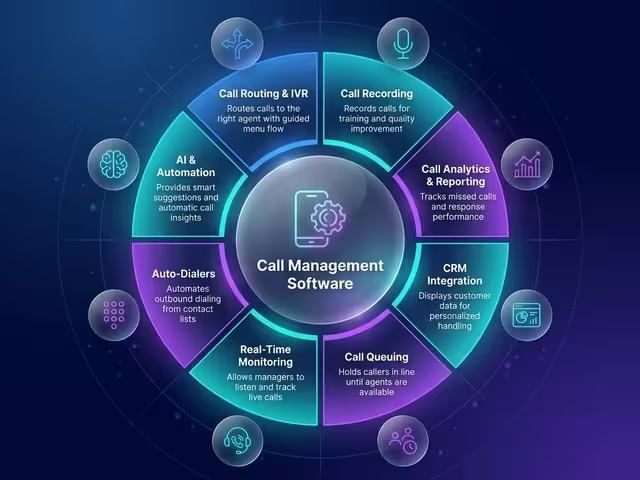
A smart call management software makes sure that every call coming to a business and going out from a business reaches the right person at the right time. The key features of the system includes:
- Call routing & IVR: The IVR system guides the caller with menus like “Press1 for sales team” and the call routing feature sends the caller to the right sales agent. The system together creates a better call flow.
- Call recording: Call recording allows businesses to listen to a call which is already completed. This helps to train the staff and improve customer experience management.
- Call analytics & reporting: Call analytics will show how many calls are missed and how fast a team handles the issue. This is very important for contact center automation.
- CRM integration: When a customer calls, their name and history pop up on the screen. So the call handling and management techniques will be more tailored.
- Call queuing: Call queuing keeps the callers on the line until an agent becomes free. This is very important in inbound call management.
- Real-time monitoring: Managers or other key people can listen to live calls. This is an important call management tool for customer support.
- Auto-dialers: In outbound calling, the automated call management system dials the numbers of the customers from a predefined list. So, agents can spend their time handling calls rather than making calls.
- AI & automation: The future of cloud telephony solutions is AI call management system for businesses. The feature can automatically take notes or suggest answers to agents with the help of AI.
Various types of call management systems
Some of the main business call management system setups are:
- Cloud based call management: This is a popular cloud telephony solution nowadays. The system is hosted on the provider’s servers. It is accessed via the internet. This is the best call management software India-based businesses can have as it needs zero on-site hardware. It is also ideal for call management software for remote teams.
- On-premise systems: The traditional systems that include servers and PBX boxes. This type will be located inside an office. It may incur high charges due to its setup and maintenance cost.
- Hosted PBX: A hosted PBX is a virtual kind of desk-phone system. A provider will manage the technical side offsite. And business uses the features of call management software like call routing & extensions without the help of an IT expert.
- VoIP based systems: Voice over internet protocol technology allows to make calls over the internet. Today, call center management solutions are built on VoIP. It offers easy CRM integration and lowers the cost for outbound calling.
- AI-powered systems: An AI call management system for businesses uses AI in customer support to perform tasks like real time call monitoring, sentiment analysis, etc. There will be an AI-enabled IVR system to solve customer issues without a human agent.
Comparison table
|
System type
|
Best for
|
Key advantage
|
|---|---|---|
|
Cloud-based
|
Small Business / Startups
|
Low upfront cost & high scalability
|
|
On-premise
|
Large Enterprises
|
Complete data control & security
|
|
VoIP
|
High-Volume Sales
|
Cheap outbound calling & remote work
|
|
AI-powered
|
Tech-Forward Support
|
High agent productivity via automation
|
Benefits of call management systems for businesses
To streamline the business communication systems, companies should implement a smart business call management system. Let us see some of the benefits of using call management software for a company.
- Improved customer experience: IVR and call routing features will connect the customers to the right team right away. So, there will be better customer experience management to ensure customer journey optimization.
- Faster response times: Call management software in India focuses on call queuing and routing. Instead of keeping the customer in long holds, there will be an automated call flow. This reduces the wait times.
- Reduced missed calls: With cloud telephony solutions, if an agent is busy, the system can use an automated call management system to route calls to a mobile device or record a voicemail. This helps to follow-up immediately.
- Boost team productivity: CRM integration & workflow automation helps agents to see history of calls in an instant. This will boost the productivity of agents.
- Cost efficiency: By shifting to a cloud call management system for small business, startups don’t need to spend on hardware. VoIP system technology allows call management software for remote teams.
- Data driven decisions: Modern call manager software provides detailed call analytics, call logging, and call recording. With this data, key people can find the peak time and staffing needs. This results in better contact center automation.
Call management vs call center management
Call management and call center management works at different levels of a business system. Call management is the way in which a phone call is handled. But, call center management is more broad. It includes operational oversight of the people, technology, and strategy.
Comparison table
|
Feature
|
Call management
|
Call center management
|
|---|---|---|
|
Scope
|
Focuses on the individual call flow and technical routing.
|
Focuses on the entire ecosystem (people, processes, and tech).
|
|
Use case
|
Essential for any business call management system, from clinics to tech startups.
|
Specific to large-scale operations like support hubs or sales floors.
|
|
Complexity
|
Technical and tactical (setting up an IVR system or call queuing).
|
Strategic and human-centric (forecasting, agent coaching, and workflow automation).
|
|
Tools used
|
Call manager software, call routing, and voip system features.
|
Workforce management (WFM), call monitoring, and agent productivity trackers.
|
Call management in various industries
In various industries, call management software plays important role in different ways, including:
- Banking & finance: Security, CRM integration, and high-priority call routing.
- Healthcare: Patient confidentiality, inbound call management, and 24/7 availability.
- Ecommerce: Customer journey optimization, omnichannel communication, and rapid response.
- Real estate: Lead capture, call management software for remote teams, and mobile accessibility.
- Logistics: Workflow automation, driver-to-office telephony system connectivity, and coordination.
Relevance of call management software in Indian market
We can easily understand the call management software India-based companies should focus on. In 2026, the Indian market has shifted to app-based cloud telephony solutions.
- Growing adoption: Many businesses are moving away from traditional systems to digital telephony systems. It’s cheaper, faster to set up, and allows for call management software for remote teams .
- Cloud telephony trends: Many call manager software in India now include smart features that were only previously available with premium providers. It includes instant setup, AI helpers, and smart routing.
- Compliance: The TRAI and DoT keep the system complaint legally. Businesses making service or transactional calls should now use specific number series. Also, registration with OSP guidelines is very mandatory for using a call management system. Many best call management software India providers will handle this paperwork for a business to ensure they aren’t blocked.
- SMB vs Enterprise: If the business is small, a cloud call management for small business is the best option. It is affordable and keeps TRAI compliant. If the company is large, they should focus on contact center automation. This will run things smoothly.
Challenges in call management
Let us see some of the common challenges & their solutions in call management.
- High call volume: Call management softwares offer IVR systems. This provides self-service options to fix routine tasks easily.
- Missed calls: With an automated call management system, the software can handle overflow and send instant missed call text-backs.
- Poor tracking: Call analytics tools offer more visibility into call logging & identify peak hours.
- Agent inefficiency: Any inefficiency in the agent’s work can be monitored with call monitoring and agent productivity trackers. This helps to train teams and increase efficiency.
How to select the best call management software?
Here is a simple checklist that helps a business to evaluate call management solutions for startups and enterprises alike.
- Scalability: Look for flexible cloud telephony solutions. Pay as you use models are best fit.
- Integration capability: Open APIs or native plugins should be available for existing helpdesk systems.
- Pricing: Businesses must look for hidden costs like setup fees, AMC (Annual Maintenance Charges), or extra costs.
- Ease of use: A clean dashboard, a mobile app for remote teams, and a simple IVR system builder is a must.
- Support: There should be dedicated account managers and a reputation for quick ticket resolution.
Best practices for effective call management
In 2026, call management is not just a tool. Businesses can turn the telephony system into a growth engine. The following is the best practices for implementing an effective business call management system.
- Train agents for high stake customers: With automation, simple tasks are handled by customers themselves. The calls that reach an agent will be more complex. So focus on scenario based training & emotional intelligence. They can use call recording features to play back successful customer-agent interactions.
- Use automation: With workflow automation, companies can send instant SMS updates after a call or to sync the data to CRM. So, the customers don’t need to repeat the info. This will improve the customer experience management.
- Monitor KPIs: The speed to answer is the main thing in 2026. So, the focus should be on first contact resolution (FCR) and sentiment analysis using the call analytics dashboard.
- Optimize call flows regularly: A static IVR system is a dead end. The call flow should be a living map that changes based on real-time data. So, call management software should use skill-based call routing to send high-value clients to the top performers and use call queuing data to adjust staffing during peak hours.
In the Indian market, TRAI compliance is a best practice in itself. So, ensure a call management software India automatically scrubs DND (Do Not Disturb) lists to keep the outbound calling legal and professional.
By combining these call handling and management techniques with the right call manager software, we can transform the support desk from a cost center into a value-driven business communication system.
Conclusion-The future of call management systems
To conclude, we can say an efficient call management system helps businesses handle their phone calls and manages both incoming and outgoing calls and can be used by in-house teams, remote workers, or third-party call centers.
The system helps companies organize and control their call flow effectively. With the Bonvoice call management system, businesses keep customers close with every call.
Frequently asked questions
1.What is call management in simple terms?
Call management is the process by which a system organizes, routes, and tracks phone calls. So, the customer interactions are handled efficiently.
2. What is a call management system used for?
A business call management system automates call routing, set up and IVR system and records calls. All these will result in CX management.
3. What are the benefits of call management software?
Call management software reduces missed calls, boosts agent productivity, automates workflow and offers call analytics.
4. How does call management improve customer service?
With automated call management systems, customers reach the right team each time. So, the customer journey will be smooth and seamless.
5. Which is the best call management software in India?
Some of the top call management software India providers include Bonvoice, Exotel, Myoperator, etc. They are popular for their cloud telephony solutions and CRM integration.
References:
- Forbes Tech Council. “Brain Games and Breakthroughs in Call Center Automation.” Forbes, 17 May 2017, www.forbes.com/sites/forbestechcouncil/2017/05/17/brain-games-and-breakthroughs-in-call-center-automation/.
- Bonvoice. “#1 Call Management Solution | Smart Call Center Software.” Bonvoice, 2026, bonvoice.com/cloud-telephony-providers/call-management/.
- “Call Management.” Wikipedia, Wikimedia Foundation, 22 Mar. 2026, en.wikipedia.org/wiki/Call_management.
Prompts used:
- What is call management?
- Call management softwares
- Call management softwares in Indian market
- Checklist for call management implementation