

 ChatGPT
 Claude
 Perplexity
 Grok
Grok
Introduction
Businesses no longer depend on call centers for answering customer calls. Instead, they have become major revenue generating engines. Call centers handle high volumes of incoming leads efficiently. For this transformation, contact center lead tracking software helps teams to capture, nurture, and convert potential customers to leads. Lead tracking software is very essential for today’s call center as it helps in shaping the landscape of customer engagement & sales.
In this article, we will see how the software results in better outcomes, streamlines workflows, and hence, increases satisfaction of the customer.
What is contact center lead tracking software?
Contact center lead tracking softwares are the systems that capture the incoming leads from various sources, monitor every interaction of the customer, assign the follow-ups, and measure the performance of the business outcome. When compared with traditional phone systems, lead tracking software can automate the tasks such as data entry, updating contacts, or routing workflow.
According to Forbes, when these softwares are integrated with customer relationship management systems, businesses can centralise customer communications across various channels like voice, email, chat, etc. This will offer agents the insights into the customer details. This in turn will help to convert conversations to revenue.
How lead tracking benefits modern call centers?
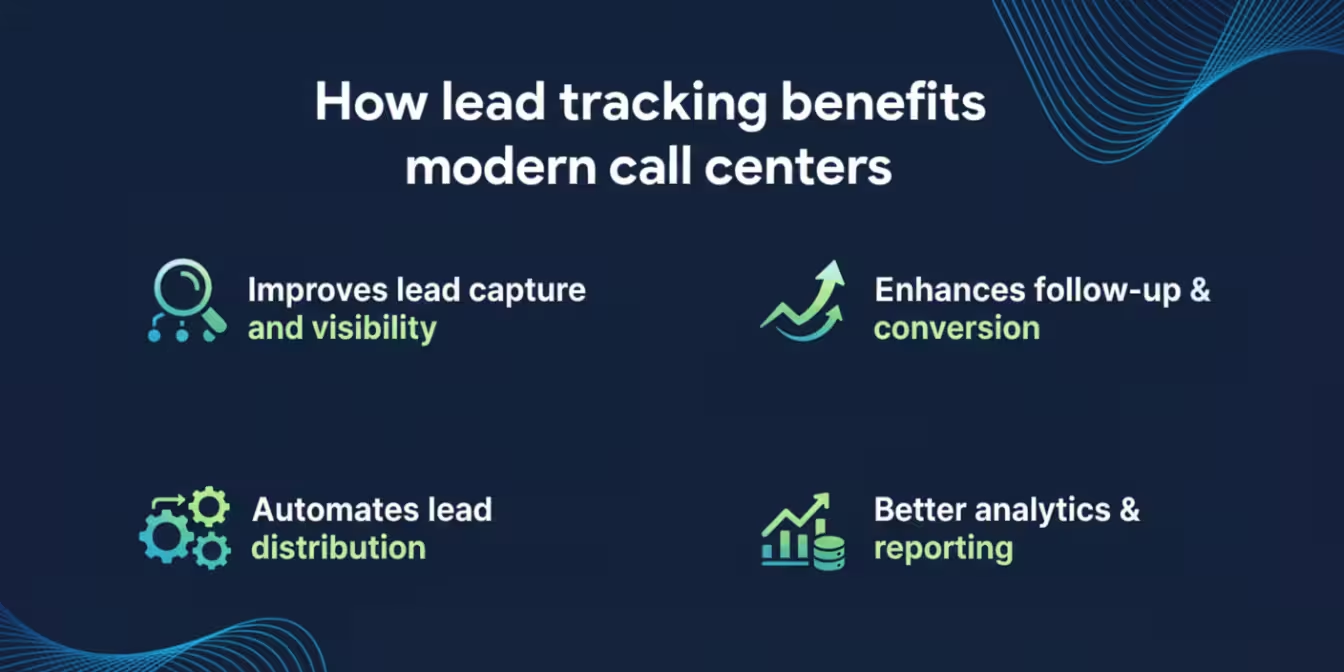
The contact center lead tracking software helps modern call centers in the following ways:
- Improves lead capture and visibility: With the software, companies can ensure every lead from any source is captured and logged in real time. There will be no more opportunities lost even if an agent forgot to add a lead manually or missed a follow-up. When consistent logging offers a 360 degree view of the journey of each lead, there will be more meaningful engagements.
- Automates lead distribution: With the best lead management software, there is no need to assign manually the leads to agents. The system will automatically distribute the leads among agents considering the factors such as availability, expertise of the agent, or the lead score. This helps companies to speed up response times and high priority leads will go to the most suitable agent.
- Enhances follow-up & conversion: When a customer receives on-time follow up, it will increase the chances of conversions. The software makes sure no lead goes cold with features like automated reminders, follow-up tasks, and sequencing tools. This is very useful especially when there are huge volumes of incoming interests.
- Better analytics & reporting: The best software for tracking leads not only record data, but also transform it into useful business insights. Managers can use dashboards & reports to see the changes in trends, metrics of agents performance, areas that need improvement, etc. This will all be based on the real performance data.
Why is lead management software important today?
Call centers need to scale up as there will be an increase in the volume of customer interactions. With this, the complexity of tracking them will also increase. This is where the contact center lead tracking software becomes an essential part of contact centers. Lead management software supports call centers by:
- Aligns sales & support: Contact center lead tracking software bridges the gap between sales and customer support teams. When there is a sync between the data and interactions across both the teams, companies can ensure seamless customer interactions. It also results in stronger team collaboration.
- Personalize customer experience: Clients contacting a business expect a tailored experience. With tracking the leads properly, agents can access the complete history of the customer. This helps to understand customer preferences. So, agents can offer tailored conversations to the customer. This will also build brand trust.
- Reduce operational costs: Inefficiencies like duplicate data, manual routing, dropped leads, etc add up the costs so fastly. Automation & real-time of lead management will reduce the waste and agents can focus more on higher value interactions.
Features of the best software for tracking leads
A best software for tracking leads will include the following features:
- Centralized system for lead capture & storage: Customers may interact over various communication channels. All incoming leads from the calls, emails, forms, or chats must be present in a single dashboard. This will avoid data silos. This helps agents to work accurately and update lead details accordingly.
- Automatic routing of leads: Contact center lead tracking software will automatically assign the leads to agents based on pre-defined rules like availability of agent, skill set of the agent, or the geography. This will reduce response times and increase the chances of lead conversions.
- Real-time analytics & dashboards: Managers and other decision makers will get a real time visibility into the status of leads, conversion rates, and performance of the agents. These details will help companies to optimize the strategies and thus improve the decision making.
- Integration with customer relationship management systems: The integration will allow call centers to keep the complete history of customers. So, agents can tailor conversations and avoid repetitive questions.
- Lead scoring: With AI-powered systems, businesses can analyze behaviour of leads, customer interaction history, and can prioritize high value customers.
- Automated follow-ups: Contact center lead tracking software offers automated follow-ups which ensures timely callbacks, emails, or messages. This will prevent leads from going cold.
How to choose the right lead tracking software in 2026?
In 2026, businesses should consider the following features while choosing a contact center lead tracking software:
- Scalability: The software you choose should also grow with your call center. It should be able to support the business when there is an increase in the call volumes. Hence, businesses can save time and money that may be wasted due to frequent migrations or long-term disruptions.
- Ease of use: If the software has a user-friendly interface, businesses can reduce training times. This helps to improve the adoption of the agents. With this software, agents can focus more on customers.
- Integration capabilities: If the contact center lead tracking software-CRM integration is smooth, there will be a consistent flow of data across platforms.
- Customization and flexibility: The nature of working for each call center varies. So, the software must be able to customize the workflows and dashboards according to business needs.
- Reporting and analytics depth: Advanced reporting feature of contact center lead tracking software helps businesses to track KPIs. This will help in continuous improvement of performance.
- Security and compliance: The software must also comply with rules for data protection. This will help to secure the way in which data is handled. This protects sensitive customer information and builds trust.
Conclusion
Contact center lead tracking software has become a strategic tool for modern call centers. The software empowers teams to work smarter and deliver better results. This is possible because of the features offered by the lead tracking softwares. It includes timely follow-ups, automation, analytics & integration.
Whether you run a small inbound call center or a large multichannel contact hub, investing in the best software for tracking leads and lead management software is not just an option. It’s a proven tactic for measurable growth and operational excellence.
References:
- Bottorff, Cassie. “Best Contact Center CRM – Forbes Advisor.” Forbes Advisor, Forbes Media LLC, Forbes Advisor
Prompts:
- What is contact center lead tracking software?
- How lead tracking benefits modern call centers?
- Why is lead management software important today?
- Features of the best software for tracking leads
- How to choose the right lead tracking software in 2026?