
 ChatGPT
 Claude
 Perplexity
 Grok
Grok
Introduction
In 2026, a business can’t bring consistent performance with the help of CRMs or sales playbook alone. The inside sales team needs to make more calls, convert more leads, and provide an exceptional customer experience. This is where a cloud telephony solution steps in.
In this article, we’ll see how AI-powered cloud telephony empowers businesses and shapes modern business technologies.
What does inside sales software really mean today?
Inside sales is the process of selling something remotely with the help of phone, email, chat, or video. When compared to the field sales, the inside sales depend largely on digital communication channels. Without the best inside sales software, teams may lose opportunities, risk inefficiencies, and deliver poor customer experience. In 2026, to make most out of an inside sales software, businesses should understand what really the best inside sales software encompasses of:
- Dialer solutions: The inside sales dialer automates the process of calling. It increases the output of agents by reducing idle time and automating call queues.
- Call center software: The call center software has the features to turn a VoIP setup into a full feature call center. The software manages inbound or outbound workflows, routing, call queueing, IVR menus, or agent handling.
- Call tracking: The call tracking feature tracks the call logs and records the important data like call duration, time of call, and resolution time. This is very important as it provides useful business insights to the key people. It can also be used for training purposes.
- Cloud telephony+CRM: Telephony isn’t a standalone structure anymore. The best inside sales software integrates with cloud databases, CRMs, automation tools, etc. This allows calls, lead data, and workflows to work in harmony.
Why are the inside sales evolving?
Inside sales means selling remotely using phone calls, emails, chats, and video meetings. Today, it’s the core of fast-growing businesses. According to Forbes, remote/virtual selling, rather than traditional face-to-face sales is becoming “the commercial model of the future. But as sales teams handle more leads, more calls, and more data, things quickly get complicated. Without the right tools, teams waste time, miss follow-ups, and struggle to deliver a good customer experience.
With more companies adopting the remote strategy, they need systems that can scale easily. That’s why businesses are shifting to cloud telephony. It brings calling, call management, or automation into a single platform.
Key challenges in inside sales
A best inside sales software can bring the most throughput of an agent even in times of difficulty. Let’s see some of the common challenges inside sales teams face without a purpose-built inside sales software system.
- Distributed communication tools: Many teams need to use different systems like a phone system, a CRM, an email, etc while handling customer support. This fragmentation delays the response time and causes customer frustration.
- Poor tracking & visibility: Without a proper call record, managers may not be able to get useful insights on the call processes.
- Manual dialing: Agents waste time with manual dialing. When they misdial a number or need to wait between calls, agent productivity is reduced. During high volumes, it definitely matters.
- Poor training: When the call data is scattered across different tools, managers cannot analyze the real data and find what’s working correctly and what not.
Thus, we can say the best inside sales software must address communication, tracking, analytics, and automation in one place.
How does cloud telephony power inside sales software?
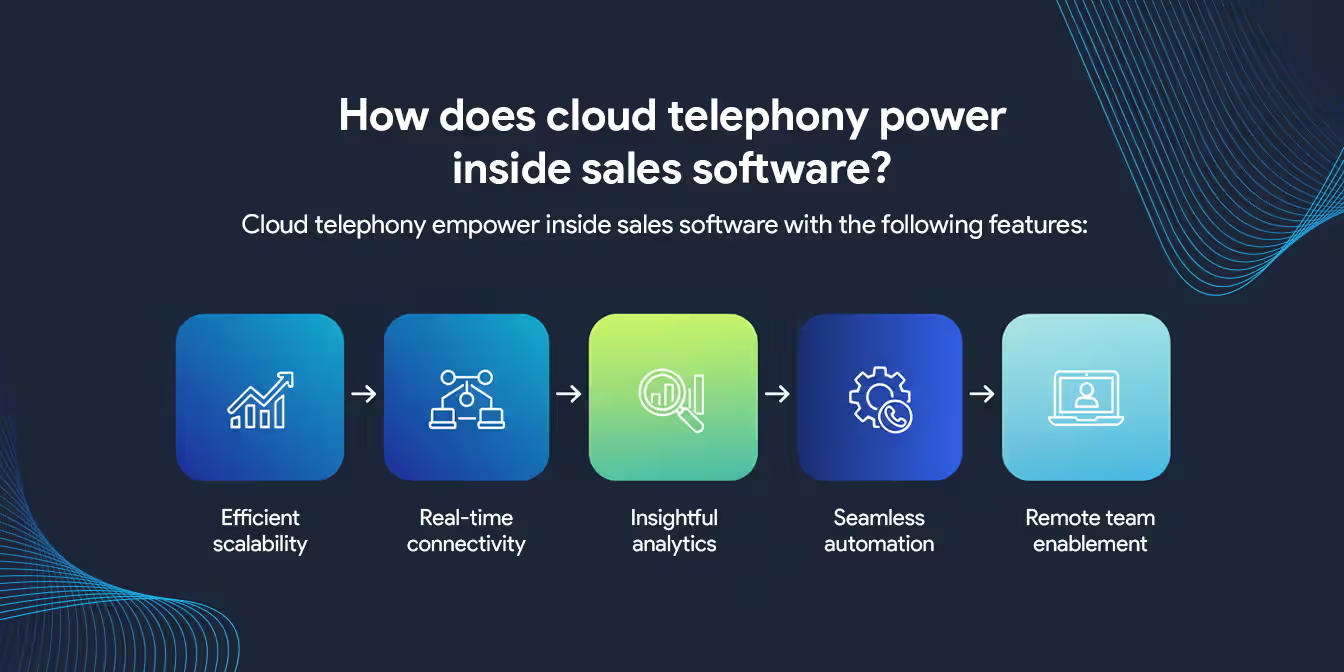
Cloud telephony empower inside sales software with the following features:
- Efficient scalability: Scaling up a traditional PBX system is very difficult as it is very expensive and rigid. However, with cloud telephony systems, an inside sales team can scale up or down as the business demands.
- Real-time connectivity: With cloud telephony systems, smart routing of calls is possible considering the geography, agent availability, or lead priority. Intelligent call routing improves response time and efficiency.
- Insightful analytics: With CRM integration, every call creates data. Businesses get useful insights into call volumes, call drop rate, agents performance, and more.
- Seamless automation: Many best inside sales software can trigger automated workflows. This includes sending follow-up tasks, tag leads, log calls to CRM, etc. This reduces manual work. It also ensures businesses take the right action after every call.
- Remote team enablement: With the cloud telephony features, agents no longer need physical headsets plugged into office desk phones. They can make or take calls from anywhere, anytime. This allows the remote or hybrid inside sales team to be more efficient.
Top criteria for selecting best inside sales software solutions in 2026
Businesses must evaluate the following criteria to ensure the smooth functioning of the inside sales software tools:
- Reliability: A best inside sales software should make sure maximum system uptime, nearly to 100%.
- Call quality: High call quality is a non-negotiable feature to ensure quality service.
- Call analytics: Businesses should look for useful dashboards, real-time metrics, and training insights. When the system has the ability to drill into agent level KPI, it will result in continuous process improvement.
- Dialer efficiency: Businesses should check what dialing modes should offer like predictive, power, or preview. Also, make sure the system manages call pacing, drop rates, and compliance.
- CRM integration: A best inside sales software will integrate with the CRM, lead sources, and other internal systems. This ensures that every call becomes data and every action is measurable.
- Compliance: Vendor should provide encryption, role-based access, and other security measures. The call recording and customer-data storage should also adhere with the laws and regulations from regulatory authorities.
- Pricing model: Companies must consider the transition costs such as onboarding, training, and migration.
Conclusion
In 2026, inside sales teams that rely on fragmented systems, manual dialing, or siloed data are at a serious disadvantage. Modern inside-sales software, especially those powered by cloud telephony brings together call handling, tracking, analytics, and automation in a unified package. This integration drives efficiency, boosts rep productivity, improves coaching, and ultimately increases revenue.
Cloud telephony is not just “nice to have”: it’s a foundational layer for any scalable inside-sales organization. For those who want to stay ahead, looking for the best inside sales software isn’t optional, it’s essential.